

Porsche automobiles are designed with extremely tight tolerances, sophisticated mechanical systems, and top-quality components. This is why Porsche maintenance has to be done in a more precise and consistent manner as compared to other cars. The typical Porsche maintenance plan recommends maintaining your vehicle every 10,000 miles, or at least once a year, depending on when the service is due. This varies based on the type of car you own, lifestyle, and weather conditions. If you frequently drive their Porsche in extreme settings like spirited race events or canyon trips, regular checks are required. The environmental factors can play an important role too; extreme temperatures or cold circumstances can wear down filtering, fluids, and seals. Make sure to refer to the Porsche owner's guideline for precise timings for service and talk to an experienced specialist to ensure that each component gets the care it deserves. Maintaining a consistent schedule does more than just preserve performance, but also safeguards the longevity of your car.
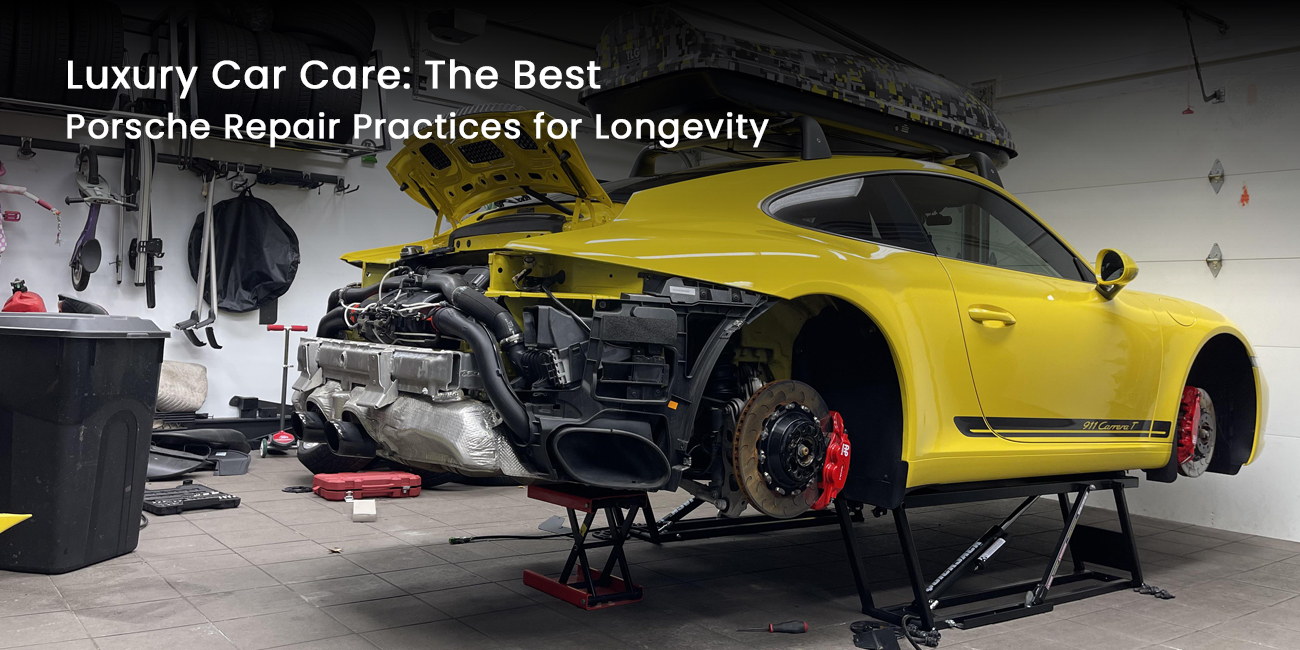
Luxury Car Care: The Best Porsche Repair Practices for Longevity
09 Dec 2025
Table of Contents
- The Porsche Promise: Why Meticulous Care Is Non-Negotiable
- Foundational Longevity: Adhering to Porsche’s Service Schedule
- The Heartbeat of Performance: Engine & Powertrain Preservation
- Beyond the Engine: Critical Systems for Uncompromised Driving Dynamics
- The Right Hands: Choosing Your Porsche Care Partner
- Proactive Longevity: Advanced Preventive Measures for Discerning Owners
- The ROI of Excellence: Longevity, Resale Value, and Peace of Mind
- Conclusion: Your Porsche, Built to Last, Maintained to Endure
- FAQs
The Porsche Promise: Why Meticulous Care Is Non-Negotiable
More Than Just a Car: Preserving the Porsche Legacy and Driving Experience
A Porsche is not just about transport; it's an icon of history as well as engineering excellence, providing an experience of driving unlike similar. The perfect balance between precise mechanics and balanced performances, and refined driving requires constant focus on the smallest of details. A high-end car maintenance program ensures that each and every trip reflects the quality of the car's design. The lack of routine care gradually diminishes the characteristics that make up the Porsche name, including throttle response to stabilization in corners.
Longevity as the Ultimate Performance Metric: Beyond Speed and Power
Even though Porsche automobiles are known for acceleration and performance, the true quality is determined by the way that the car can stand the test of time without losing its initial feel. It is at this point that engineering expertise meets the responsibility of the owner. In order to maintain reliability, structural integrity, and responsiveness takes a lot of effort and an unwavering appreciation for the unique mechanical requirements.
Foundational Longevity: Adhering to Porsche’s Service Schedule
Your Blueprint: Understanding and Utilizing the Porsche Owner’s Manual
Each Porsche owner's manual provides an essential guideline for the long-term maintenance of your vehicle. Porsche engineers create customized servicing recommendations specific to each model. They outline the intervals for maintenance, fluids, parts, as well as the most important checks. The knowledge of these rules is the basis for maximising the lifespan of your vehicle and also avoiding breakdowns.
Decoding Service Intervals: Minor, Intermediate, and Major Services Explained
Porsche maintenance follows a specific system that involves minor, intermediate, and major maintenance. Minor inspections include vital checks and fluid tests. Intermediate services include more thorough examination of components that wea.r Major services offer complete restoration throughout the car. Every interval is a contribution to the overall preservation of performance, longevity, and harmony in the mechanical system.
The Science of Scheduled Maintenance: What Each Service Aims to Achieve
Porsche's schedule of service is created to protect the engine, transmission, electronic systems, cooling, as well as driving dynamics. Every service interval focuses on the wear patterns that develop in the course of time. It ensures that each critical part is operating at its peak performance and reduces the chance of costly Porsche repairs to come up in the near future.
The Heartbeat of Performance: Engine & Powertrain Preservation
The Right Oil: Why Porsche-Approved Specifications Matter
Oil is the primary protection for Porsche engines. Approved standards like A40 or C30 are designed to stand up to extreme temperatures, keep the viscosity of the oil under pressure, as well as provide exact channels for lubrication. Any other specifications that are not approved by Porsche's list may result in the accumulation of deposits, premature wear, as well as a decline in performance.
Viscosity, Ratings, and Synthetics: Understanding Your Porsche’s Lifeblood
Viscosity controls how the oil moves through the engine at different temperatures. Porsche engines heavily rely on synthetic blends, which offer the stability needed during extreme temperatures and cold. A proper viscosity will ensure peace of mind, the best energy efficiency, and also long-lasting mechanical security.
Cooling System Integrity: Preventing Overheat and Protecting Vital Components
The cooling system helps prevent overheating through the regulation of temperatures across the engine's parts. The quality of cooling fluid, the water pump's performance, the condition of radiators, and the ability to adjust thermostats are vital to ensuring the performance. The well-maintained cooling system will prevent fractures, warping, and internal engine damage.
Transmission Health: Specialized Care for PDK and Manual Gearboxes
The Porsche PDK dual-clutch transmission needs periodic changes in the fluid to keep speedy shifts and reliability. Manual transmissions require maintenance and lubrication to prevent problems with the clutch and synchro. Neglecting maintenance on your transmission is among the most effective methods of reducing the life span of your vehicle.
Fluid Changes and Filter Replacements: Extending Powertrain Life
Every fluid, such as engine grease, oil for gears, brake fluid, coolant, and power steering fluid, plays a part in the protection of internal parts. Regularly replaced filters remove the toxins and guarantee smooth functioning. Clean filters aid in fluid flow, air flow, and the delivery of fuel, all necessary for longevity.
Fuel System Purity: Protecting Precision Injectors and Maintaining Combustion
Porsche engines are dependent on precise fuel injection. The carbon buildup in the fuel system, contaminated fuel, or clogged filters can reduce effectiveness and wear. Clean fuel systems will ensure high performance and reduce repairs over the course of time.
Beyond the Engine: Critical Systems for Uncompromised Driving Dynamics
Masterful Braking: Ensuring Performance, Safety, and Longevity
Porsche brake systems are designed to provide high performance. The durability of the rotor is dependent on health, pad quality, and the quality of its hydraulic system. Inattention to brake health can affect security and control.
Brake Fluid Flushes, Pad, and Rotor Inspections: The Why Behind Each Step
The fluid in the brake absorbs water as time passes, decreasing the stopping force and also corroding the internal components of the brake system. Rotors and pads wear over time and must be inspected regularly for a long time to maintain braking performance and reduce strain on the system.
Precision Handling: Maintaining Suspension and Steering Dynamics
Porsche's unique handling depends on suspension precision. Bushings, control arms, tie rods, and components of the steering must be in good condition to maintain the smooth, responsive, and balanced feel Porsche is renowned for.
Alignment Checks, Bushing Inspections, and Shock Absorber Care
An alignment that is correct can improve tire life and also steering accuracy. In the event of damage to shocks or bushings, they decrease the comfort of riding and increase stability. Periodic inspections ensure that every element contributes to optimal performance.
Tire Management: The Foundation of Grip, Stability, and Safety
Tires affect acceleration, braking, as well as cornering and safety. The N-spec tires that Porsche has approved are rigorously tested to be able to meet each vehicle's characteristics. The correct rotation and pressure settings guarantee uniform wear and consistent performance.
Electrical Vitality: Battery Health and System Operation
Modern Porsche models heavily rely on electronic systems to provide control of the engine, safety functions, as well as comfort features. A healthy battery will ensure seamless operation, eliminate error messages, and enhance general mechanical performance.
The Right Hands: Choosing Your Porsche Care Partner
Dealership vs. Independent Specialist: A Balanced Perspective
Dealerships can provide OEM equipment and expertise and equipment, while independent experts provide individualized service that is often cheaper costs. Which one is best for you depends on your goals, budget, and specific requirements for your particular model.
Key Questions to Ask When Selecting a Porsche Service Center
A reputable Porsche service centre should have expertise, transparency in pricing, the latest diagnostic tools, and specialist education. Enquiring about the certifications of technicians and service warranties can help ensure that your vehicle is in good health for the long term.
The Undeniable Advantage of Genuine Porsche Parts
OEM parts ensure a perfect fit with engineering compatibility as well as durability for a long time. Utilizing genuine parts decreases the risk of premature wear or issues secondary to it.
Identifying Expert Technicians
Technicians who hold Porsche qualifications and hands-on expertise know the unique design of the Porsche brand. Their experience ensures accurate diagnoses, accurate repairs, and precise maintenance scheduling.
Proactive Longevity: Advanced Preventive Measures for Discerning Owners
Listening to Your Porsche: Recognizing Subtle Changes
Abnormal sounds, smells, or driving sensations are early indicators of potential issues. Addressing these changes quickly prevents costly failures.
Beyond the Dash Lights: Early Detection of Problems
Dashboard alerts signal issues with sensors, fluids, emissions, or mechanical systems. Prompt attention ensures safety and prevents escalating damage.
Regular Owner Checks: Fluids, Tires, and Visual Inspections
Consistently checking fluid levels, tire conditions, and visible components helps identify early wear before it becomes serious.
Adapting to Your Environment: Climate-Specific Care
Extreme climates require tailored maintenance. Heat impacts fluids, cold affects battery performance, dust influences filters, and road salt accelerates corrosion.
Driving Habits for Longevity
Gentle warm-ups, smooth acceleration, and proper cooldown procedures greatly extend mechanical life. Responsible driving habits complement the precision engineering Porsche is known for.
The ROI of Excellence: Longevity, Resale Value, and Peace of Mind
The Power of a Documented Service Record
A meticulous service history demonstrates responsible ownership and enhances market appeal. Buyers place significant value on documented Porsche maintenance.
How Meticulous Care Raises Resale Value
A well-maintained Porsche retains performance quality, aesthetic appeal, and mechanical integrity, making it far more desirable on the market.
Minimizing Long-Term Ownership Costs
Preventive maintenance reduces the need for major repair interventions, allowing owners to enjoy performance without financial surprises.
The Emotional Value of a Well-Preserved Porsche
Beyond monetary worth, a properly maintained Porsche offers years of connection, enjoyment, and pride for its owner.
Conclusion: Your Porsche, Built to Last, Maintained to Endure
The Commitment to Continued Excellence in Porsche Ownership
Preserving your Porsche’s performance requires dedication, consistency, and respect for the brand’s engineering excellence.
Empowering Your Porsche’s Future Through Diligent Care
By following proper Porsche repair practices, maintenance schedules, and attentive driving habits, you ensure that your vehicle remains a lasting symbol of luxury, performance, and automotive artistry.
FAQs
Explore our FAQs below or find the answers you're looking for right here.
-
How often should I follow the Porsche service schedule?
-
Does using non-Porsche oil affect performance?
The use of non-approved Porsche oil will significantly influence the performance of your engine, its reliability, and durability. Porsche engines are engineered to work with certain oils, like A40 or C30. A40 and C30 specifications that satisfy the strict standards for temperature stability, viscosity, as well as detergent properties. The oils ensure an appropriate lubrication level under intense heat with high RPMs as well as extreme pressures--conditions Porsche engines often encounter. Unapproved oils may break down quickly, produce deposits and reduce the efficiency of fuel, and permit metal-on-metal contact, which causes internal wear to increase. As time passes, this may cause sludge to build up in the engine, a decrease in horsepower, sealing failure, and eventually longer-term damage to engines. For optimal performance and to prevent costly repairs to your engine, it is essential to only use Porsche-certified oil at each service interval.
-
Is PDK maintenance different from manual transmission care?
PDK (Porsche Doppelkupplung) transmissions need a distinct approach to maintenance compared to conventional manual gearboxes. The PDK system is comprised of two clutches and advanced hydraulics, as well as sophisticated software that are all working together to offer quick, smooth gear changes. To ensure that this system's performance is maintained, the PDK needs regular changes of the filter and fluid that protect fragile internal parts as well as stop excessive heat. Inability to keep the fluid in good condition could result in harsh shifting, delay, excessive heat, and expensive mechanical repairs. The manual gearboxes, on the side, use gear oil to grease mechanical gears as well as synchroizers. Although they are less complicated, however, they require the right attention to prevent grinding of gears, wear, and synchro wear as well as damage to the clutch. Both systems need regular attention, but the PDK--due to its sophistication--requires more specialized Porsche repair knowledge, making professional service essential.
-
Do N-spec tires really make a difference?
N-spec tires make a significant contribution to the safety, performance, and overall driving experience of Porsche automobiles. They go through a strict review process of approval through Porsche engineers to ensure that they are in compliance with the strictest standards for durability, grip, as well as temperature resistance, and stability at high speeds. Porsche models depend on exact features of the tires to guarantee steady handling, balanced cornering, and optimal braking performance. The use of non-approved tires could weaken the steering response, decrease the stability of the vehicle at higher speeds, as well as increase the distance of braking or even affect electronic systems, such as traction control, as well as Porsche Stability Management. The N-spec tires have been designed to enhance the geometry of suspension, tuning for chassis as well as the unique weight distribution of Porsche automobiles. They are the best--and most secure option for preserving authentic Porsche performance.
-
What is the most important aspect of Porsche's longevity?
The primary factor to ensure long-term Porsche endurance is constant and proactive compliance with the official Porsche maintenance schedule. Regular maintenance helps to identify early signs of issues that are minor prior to the onset of significant mechanical issues. It includes regular oil change as well as cooling system inspections, brake fluid flushes and transmission maintenance, and suspension evaluations. The longevity of your vehicle is also dependent on high-quality parts, certified technicians, and smart driving habits that adhere to warm-up time and limit mechanical stress. If they are combined, these methods protect the engine's health and handling accuracy, as well as the interior and quality of the vehicle, for a long time. When a car is well-maintained, a Porsche will not only preserve its efficiency, but it will also have an impressively higher value for resale.
-
Why is OEM important for Porsche repair?
OEM (Original Equipment Manufacturer) components are engineered to conform to Porsche's strict requirements for durability, quality, and efficiency. Every OEM component is tested to determine an appropriate fit, the right material composition, the airflow rate, the resistance to pressure, and compatibility with Porsche's sophisticated electronic and mechanical technology. Parts from the aftermarket, although less expensive, usually lack the exactness and rigor required to work seamlessly in Porsche cars. It can result in excessive wear, sensor malfunction, abnormal vibrations, or possibly system failure. OEM components ensure that each repair brings the vehicle back according to the factory's specifications while maintaining the reliability, safety, and drive dynamics that were designed by Porsche engineers. In order to ensure long-term ownership and resale quality, OEM parts are an essential component of effective Porsche repairs.